Suunto Run 2 Review: Accurate GPS, Better Heart Rate and Offline Maps
Suunto fixes the original Run’s biggest weakness, adds proper offline maps and keeps the watch impressively light — but the higher price makes the competition much tougher.
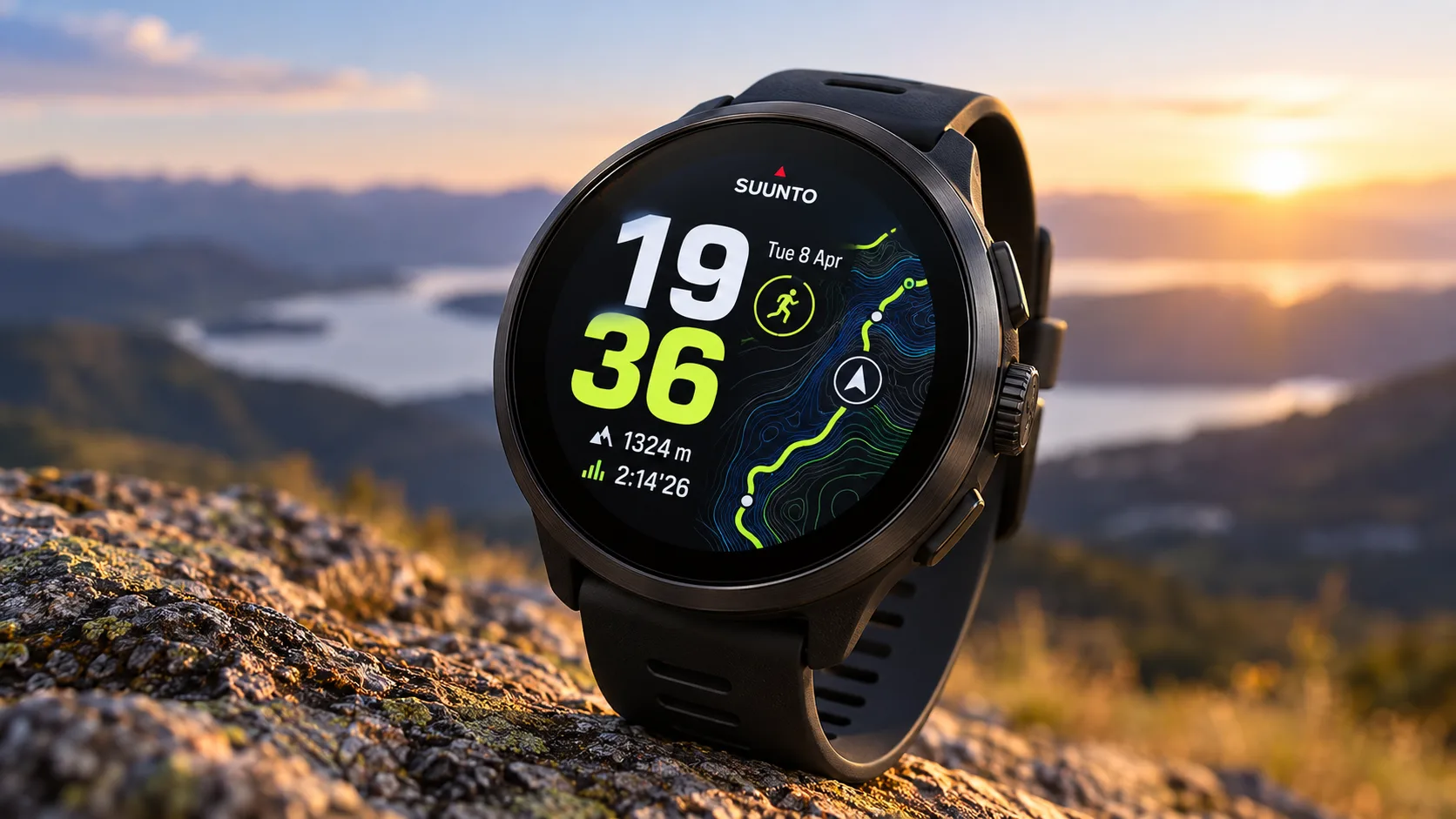
What stands out
- Excellent heart-rate accuracy: Independent testing shows a massive improvement over the original Suunto Run.
- Strong dual-band GPS: Multiple reviewers found GPS tracking consistently reliable for running.
- Offline maps: Both storage versions support downloadable worldwide maps.
- Very lightweight: The 35 g watch body makes the Run 2 especially attractive for long-distance running.
- Much brighter display: The new 2,000-nit AMOLED is a huge jump from the original Run's 600-nit panel.
- Useful marathon tools: EnergySense, Marathon Time, pacing tools and structured workouts fit the watch's runner-first focus.
Pros
- Excellent wrist heart-rate accuracy for running and cycling
- Strong dual-band GPS performance
- Free offline maps on both storage versions
- Bright 2,000-nit AMOLED display
+ View 4 more
- Lightweight and comfortable design
- Good battery life for an AMOLED running watch
- Useful marathon and pacing tools
- Local music storage
Cons
- Considerably more expensive than the original Run
- Sleep tracking remains inconsistent
- Step counts can be inaccurate
- No NFC payments
+ View 2 more
- No Spotify or comparable streaming-service downloads
- Suunto's training analysis takes some learning
Product specifications
- Display
- 1.32-inch LTPS AMOLED
- Resolution
- 466 × 466
- Peak brightness
- 2,000 nits
- Case size
- Approx. 46 × 46 × 11.7 mm
- Watch body weight
- 35 g
- Weight with silicone strap
- Approx. 53 g
- Bezel
- Stainless steel
- Glass
- Gorilla Glass
- Water resistance
- 5 ATM
- GPS
- Dual-band L1 + L5 GNSS
- Heart-rate sensor
- New 12-channel optical HR sensor
- Storage
- 4GB or 64GB
- Maps
- Free worldwide offline maps
- Music
- Local offline music/podcast storage
- Sports modes
- 35
- Battery
- Up to 10 days advertised daily use
- GPS battery
- Up to 24 hours in high-performance dual-band mode
Before you buy
- Price has climbed: The Run 2 starts at US$349 compared with US$249 for the original Run at launch.
- Sleep tracking needs work: Independent testing has raised concerns about sleep duration and REM-stage accuracy.
- Step tracking can undercount: Tom's Guide reported significant undercounting during testing.
- Limited smartwatch features: There are no NFC payments, cellular connectivity or major streaming-music integrations.
- Training insights can feel complicated: Suunto provides plenty of data but doesn't always explain it as clearly as Garmin.
- Competition is fierce: Garmin's Forerunner 170 and Coros Pace 4 sit directly in the Run 2's price range.


Suunto Run 2 Review – A much more complete Suunto running watch
The original Suunto Run already had a lot going for it. It was lightweight, had a colourful AMOLED display and offered good GPS tracking at a competitive price. Its biggest weakness was wrist heart-rate accuracy.
The Suunto Run 2 appears to fix exactly that.
Suunto has fitted the second-generation model with a redesigned 12-channel optical heart-rate sensor, while keeping the watch body at just 35 g. There’s also a brighter AMOLED display, more battery capacity and — most importantly for anyone who explores beyond familiar running routes — proper offline maps.
That combination makes the Run 2 feel less like a minor yearly refresh and more like the running watch the original model was trying to become.
Heart-rate accuracy is the biggest improvement
This is probably the most important upgrade.
The5KRunner tested the Run 2 across eight different sessions, including running, cycling, intervals, trail running and strength work. Across those sessions, average heart-rate bias remained below 1 bpm compared with reference sensors.
The Quantified Scientist produced similarly encouraging results. The Run 2 achieved a 0.99 correlation with a Polar H10 chest strap during running and indoor cycling, while outdoor cycling scored 0.98.
Tom’s Guide also compared it with a chest strap during runs and intervals and described the wrist sensor as closely following the reference throughout testing.
That’s unusually consistent agreement between independent reviewers and makes heart-rate tracking one of the Run 2’s biggest selling points.
GPS remains excellent
The Run 2 uses dual-band L1 + L5 GNSS across several satellite systems.
The5KRunner recorded an exceptional result in its standard 10-mile GPS test, while track testing landed within eight metres of a known distance. Performance under tree cover wasn’t quite as perfect, but the overall result remained strong.
Tom’s Guide similarly found the watch closely matched devices including the Garmin Fenix 9 Pro and Coros Pace 4 during real-world runs.
For a watch primarily aimed at runners, that’s exactly where Suunto needed to deliver.
Offline maps change what the Run can do
The original Suunto Run lacked offline maps. The Run 2 gets them on both the 4GB and 64GB versions.
Routes, streets and surrounding map data can be downloaded through the Suunto app and viewed directly on the watch. The larger model doesn’t unlock mapping — it simply provides far more storage for maps and offline music.
Tom’s Guide found the maps bright, responsive and easy to follow during navigation. For runners who travel, explore trails or simply don’t want to pull their phone out every time they take an unfamiliar turn, this is one of the Run 2’s most meaningful upgrades.
Great screen, light body
Suunto hasn’t tried to turn the Run 2 into a chunky adventure watch.
The watch body weighs only 35 g, while the complete watch with the supplied silicone strap is roughly 53 g. The 46 mm case combines a stainless-steel bezel, Gorilla Glass and 5 ATM water resistance.
The 1.32-inch AMOLED display now reaches a claimed 2,000 nits, compared with 600 nits on the previous Run. Tom’s Guide praised both the premium feel and outdoor visibility, although its reviewer encountered an occasional always-on-display software bug.
Battery life is comfortably good
Suunto rates the Run 2 for around 10 days of daily use and 24 hours using high-performance dual-band GPS.
Tom’s Guide managed roughly five to six days while using the always-on display and running every day. The5KRunner’s default-setting GPS test also broadly lined up with Suunto’s claimed endurance, although aggressive brightness and always-on settings reduced projected GPS runtime substantially.
It isn’t class-leading battery life, but it’s plenty for normal training and considerably easier to live with than most full smartwatch platforms.
Smartwatch features are still basic
This is where expectations matter.
You get notifications, weather, music controls, local music storage, watch-face customization and phone-finding features. But the Run 2 has no NFC payments, no cellular functionality and no Spotify-style offline streaming integration. Music must be transferred to the watch as local files.
If you’re coming from an Apple Watch or Galaxy Watch, the difference is noticeable.
An early Run 2 owner moving from an Apple Watch specifically mentioned missing tap-to-pay and voice replies, while praising the lighter design, bright display and significantly better battery life.
Posts from the suunto
community on Reddit
Sleep and everyday activity tracking are weaker
Running metrics are clearly the priority.
Tom’s Guide reported noticeably underestimated step counts and several nights where sleep duration was significantly shorter than expected.
The Quantified Scientist’s early sleep-stage testing also showed particularly weak REM detection, although those results were based on limited data and were explicitly described as preliminary. So the Run 2 currently makes more sense as a running watch that also tracks wellness than as an all-purpose health wearable.
The competition is the real problem
At US$349 for the 4GB model and US$399 for 64GB, the Run 2 enters a much tougher market than its predecessor.
The Garmin Forerunner 170 offers a more polished smartwatch experience and easier-to-understand training analysis, while the Coros Pace 4 also offers offline maps at a lower starting price.
Related Review: Garmin Forerunner 170 Review: A Brilliant Running Watch With One Big Problem
Meanwhile, discounted Suunto Race S models can sometimes overlap with Run 2 pricing while offering a broader performance-watch feature set.
The Run 2’s answer is straightforward: excellent heart rate, strong GPS, a particularly nice display, lightweight construction and easy access to offline maps.
Those strengths are real. The bargain factor just isn’t as obvious as it was with the original Run.
Reader questions
Frequently asked questions
Is the Suunto Run 2 accurate?
Yes, especially for running. Multiple independent reviewers found very strong GPS and optical heart-rate performance. The5KRunner recorded heart-rate bias below 1 bpm across several workouts, while The Quantified Scientist measured a 0.99 correlation against a Polar H10 during running.
Does the Suunto Run 2 have offline maps?
Yes. Offline maps are included on both the 4GB and 64GB versions. The 64GB model simply provides substantially more room for map regions and offline music.
Does the Suunto Run 2 play music without a phone?
Yes. Music and podcasts can be stored directly on the watch and played through Bluetooth headphones. However, there is currently no Spotify-style streaming-service integration, so compatible audio files need to be transferred manually.
How long does the Suunto Run 2 battery last?
Suunto claims up to around 10 days of everyday use and 24 hours in high-performance dual-band GPS mode. Actual results depend heavily on brightness, always-on display use and training frequency.
Is the Suunto Run 2 good for marathon training?
Yes. The watch includes structured workouts, Marathon Time prediction, EnergySense, pacing tools, race modes and offline navigation, making marathon training one of its strongest use cases.
Does the Suunto Run 2 support contactless payments?
No. The Run 2 doesn’t include NFC payments. That’s one area where competing Garmin watches and mainstream smartwatches offer more functionality.
Is the Suunto Run 2 good for sleep tracking?
Sleep tracking is available, including HRV and blood-oxygen measurements overnight, but independent results have been mixed. Tom’s Guide found incorrect sleep durations during testing, while early scientific-style testing suggested weak REM-stage detection.
Where to buy
Affiliate link: we may earn a commission if you buy through it, at no extra cost to you.
Verdict
The Suunto Run 2 is a major improvement over the original Run, particularly where it matters most for runners. The upgraded optical heart-rate sensor is performing extremely well in independent testing, dual-band GPS remains strong, the AMOLED display is much brighter, and proper offline maps make the watch significantly more useful away from familiar roads. Its biggest problem isn't the running experience — it's the price. Garmin and Coros now have strong alternatives around the same money, while the Run 2 still offers fairly basic smartwatch features and inconsistent everyday tracking such as steps and sleep.
Best for: Runners who want accurate GPS, reliable wrist heart rate and offline maps without moving into flagship-watch pricing
How we score