Garmin Forerunner 170 Review: A Brilliant Running Watch With One Big Problem
The Forerunner 170 delivers excellent GPS accuracy, deep training insights and a lightweight AMOLED design, but Garmin’s cheaper Forerunner 70 makes its value harder to justify.
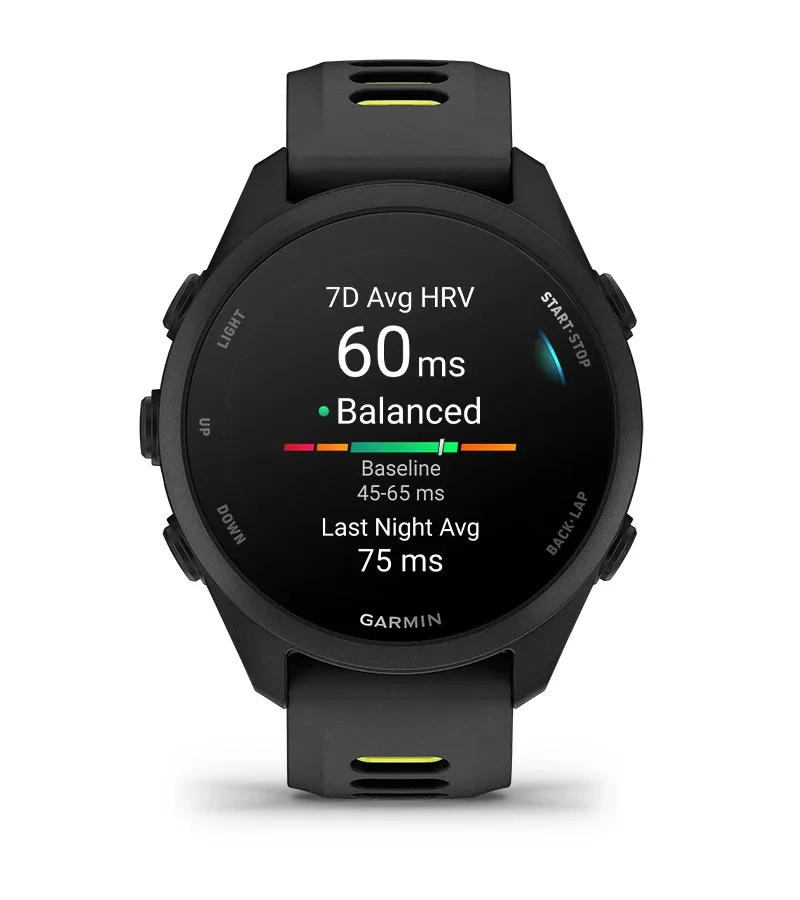
What stands out
- Excellent GPS accuracy: Independent testing found the single-frequency GPS surprisingly close to more expensive Garmin watches.
- Very strong heart-rate tracking: Despite using Garmin’s older Elevate Gen 4 sensor, independent tests produced impressively accurate results.
- Advanced training tools: Training Readiness, Training Status, Daily Suggested Workouts and Garmin Coach provide plenty of room to grow.
- Extremely comfortable: The 41 g body makes the Forerunner 170 easy to wear for running, everyday use and sleep tracking.
- Great AMOLED display: The 1.2-inch screen is sharp, colourful and easy to read while exercising.
- Excellent sports coverage: More than 80 activity profiles cover running, swimming, cycling, strength training and much more.
- Garmin Pay is genuinely useful: Contactless payments give the 170 one important advantage over Garmin’s cheaper running options.
Pros
- Excellent GPS accuracy
- Strong wrist-based heart-rate tracking
- Lightweight and comfortable
- Bright AMOLED touchscreen
+ View 11 more
- Training Readiness
- Training Status
- Garmin Coach
- Daily Suggested Workouts
- Wrist-based running power
- Running dynamics
- More than 80 sport profiles
- Garmin Pay
- Physical buttons plus touchscreen
- Barometric altimeter
- Excellent Garmin Connect ecosystem
Cons
- No multi-band GPS
- Older Elevate Gen 4 heart-rate sensor
- No dedicated triathlon mode
- Plastic-heavy construction
+ View 4 more
- Battery life is good rather than exceptional
- Offline music requires the Music model
- Forerunner 70 offers much of the same experience for less
- Limited reason for most Forerunner 165 owners to upgrade
Product specifications
- Price
- C$419.99 MSRP
- Display
- 1.2-inch AMOLED
- Resolution
- 390 × 390
- Case size
- 42.6 × 42.6 × 11.9 mm
- Weight
- 41 g
- Lens
- Chemically strengthened glass
- Bezel
- Fibre-reinforced polymer
- Water resistance
- 5 ATM
- Touchscreen
- Yes
- Controls
- Touch + 5 physical buttons
- Garmin Pay
- Yes
- Training Readiness
- Yes
- Training Status
- Yes
- Sports apps
- 80+
- Storage
- 4 GB
- Smartwatch battery
- Up to 10 days
- Always-on battery
- Up to 4 days
- GPS-only battery
- Up to 20 hours
- All-Systems GNSS
- Up to 14 hours
- Offline music
- Only on Forerunner 170 Music
Before you buy
- No multi-band GPS: Accuracy is excellent in normal conditions, but the hardware is still behind Garmin’s more expensive models.
- Older heart-rate hardware: Garmin uses its Elevate Gen 4 sensor rather than the newer Gen 5 platform.
- Only average Garmin battery life: Ten days is good, but the cheaper Forerunner 70 is rated for up to 13 days.
- No proper triathlon mode: Serious multisport athletes will need to look higher in Garmin’s range.
- The plastic build feels basic: The light polymer construction is practical but not particularly premium.
- The Forerunner 70 hurts its value: Garmin gives the cheaper model many of the same core training features for C$70 less
Garmin Forerunner 170 sits in an interesting spot in Garmin’s running-watch lineup. It is clearly more advanced than a basic fitness watch, but it stops short of the premium hardware found on models like the Forerunner 570 and 970.
For most runners, that balance actually works very well.
Forerunner 170 gives you a bright AMOLED display, accurate GPS tracking, detailed training insights and enough health features to use it as an everyday smartwatch. The bigger question is whether those extras are worth paying for when Garmin’s cheaper Forerunner 70 offers many of the same core running features.
Lightweight and comfortable enough to wear all day
One of the best things about the Forerunner 170 is how little you notice it on your wrist.
At just 41 g, it is light enough for long runs, everyday wear and sleep tracking. That matters more than premium materials on a watch designed mainly for exercise.
The downside is that the mostly plastic construction doesn’t feel particularly luxurious. Anyone coming from an Apple Watch or one of Garmin’s metal-bezel models may find the 170 a little basic.
Forerunner 170 feels cheap
by u/PhilippeVezina1 in GarminWatches
But for running, we’d take the lighter design.
Garmin also keeps its excellent combination of a touchscreen and physical buttons. You can swipe around normally during the day, then use the buttons when running, wearing gloves or dealing with sweaty hands.
The 1.2-inch AMOLED screen is colourful, sharp and easy to read without making the watch unnecessarily large.
The training features are the real attraction
You can buy much cheaper watches if all you want is distance, pace and heart rate.
The reason to consider the Forerunner 170 is Garmin’s training ecosystem.
Features such as Training Readiness and Training Status turn all the information collected by the watch into something easier to understand.
Instead of simply telling you that you slept for seven hours or completed a hard run yesterday, the watch tries to answer the question most runners actually care about:
Should I train hard today or take it easy?
You also get Garmin Coach, Daily Suggested Workouts, recovery information, running power and running dynamics.
A beginner doesn’t have to use all of this immediately. You can start with basic tracking and gradually use the more advanced features as your training becomes more serious.
That gives the Forerunner 170 plenty of room to grow with you.
GPS performance is better than the specs suggest
The biggest technical omission is multi-band GPS.
More expensive Garmin watches can connect to multiple satellite frequencies, which can improve accuracy around tall buildings, dense trees and other difficult environments.
The Forerunner 170 doesn’t have that.
Fortunately, independent testing has found its regular GPS performance to be very strong anyway. Both Tom’s Guide and The5KRunner reported accurate results during real-world running tests.
Unless you regularly run between skyscrapers or in particularly difficult GPS environments, the lack of multi-band positioning probably won’t be a major problem.
The older heart-rate sensor still does a good job
Garmin has also used its older Elevate Gen 4 heart-rate sensor instead of the newer sensor found on some premium Garmin watches.
Again, that sounds worse on paper than it appears to be in practice.
TechRadar compared the watch with a Polar H10 chest strap and found its heart-rate readings impressively close during testing.
Related Review: Polar H10 Review (2026): Still the Gold Standard for Heart Rate Accuracy?
Wrist-based sensors can still struggle when your heart rate changes very quickly, particularly during intervals or strength workouts. Serious athletes can pair a chest strap when maximum accuracy matters.
For normal running and everyday health tracking, though, the built-in sensor should be perfectly adequate.
Battery life is good, but not a reason to upgrade
Garmin rates the Forerunner 170 for up to 10 days in smartwatch mode and up to 20 hours with GPS.
That’s easily enough to avoid daily charging and should cover several workouts before you need to plug it in.
The problem is that Garmin has spoiled us.
Ten days is merely good by Garmin standards, and the cheaper Forerunner 70 actually has a longer quoted smartwatch battery life.
So battery life isn’t one of the reasons we’d choose the 170 over the cheaper model.
Garmin Pay is a small feature that can be genuinely useful
One advantage of the Forerunner 170 is Garmin Pay.
If your bank is supported, you can leave your wallet at home and still stop for a coffee or buy something during a long run.
There’s also a separate Forerunner 170 Music version if you want downloaded music without carrying your phone.
Neither feature transforms the watch, but they make the 170 feel more complete as something you wear outside workouts.
The Forerunner 70 makes the decision difficult
And this is really the problem.
Garmin’s cheaper Forerunner 70 already includes many of the features that make the 170 appealing, including Training Readiness, Training Status, Garmin Coach and a large selection of sports modes.
That means the extra money isn’t buying a dramatically better running experience.
The Forerunner 170 makes more sense for someone who wants the additional sensors, Garmin Pay and a better-rounded everyday watch.
If you only care about running, the Forerunner 70 may be enough.
Final thoughts
The Garmin Forerunner 170 gets the important things right.
It is light, comfortable, accurate and packed with genuinely useful training tools without becoming complicated enough to scare off newer runners.
The missing multi-band GPS and older heart-rate sensor look like obvious compromises, but real-world testing suggests Garmin has still delivered excellent tracking performance.
Its real weakness is simply where it sits in Garmin’s lineup.
The cheaper Forerunner 70 covers most of the essentials, while spending more opens the door to Garmin’s more advanced watches.
That leaves the Forerunner 170 in a narrow middle ground — but for runners who want advanced training features, Garmin Pay and a lightweight AMOLED watch without jumping to Garmin’s premium models, it’s a very easy watch to live with and an even easier one to recommend.
Where to buy
Affiliate link: we may earn a commission if you buy through it, at no extra cost to you.
Verdict
Buy if you want Garmin’s excellent training ecosystem, strong accuracy and Garmin Pay in a small, lightweight watch.
Best for: Runners who want advanced Garmin training tools without stepping up to the 570 or 970.
How we score