Pros
- Excellent heart-rate accuracy
- Very fast response during intervals
- Excellent HRV capability
- Rechargeable battery
- Long real-world battery life
- Detachable sensor
- Machine-washable strap
- ANT+ + three Bluetooth connections
- Standalone workout recording
- Swimming HR storage
- Advanced Garmin Running Dynamics
- Two strap sizes
- 5 ATM water resistance
- No subscription
Cons
- Very expensive for a heart-rate strap
- Garmin-specific charger instead of USB-C
- Most valuable extras target runners
- Requires compatible Garmin watches for several advanced features
- Running Economy/Step Speed Loss may not materially change your training
- Earlier units had documented snap durability problems
- Some reports of BLE Secure dropouts
- Overkill if you simply want accurate HR
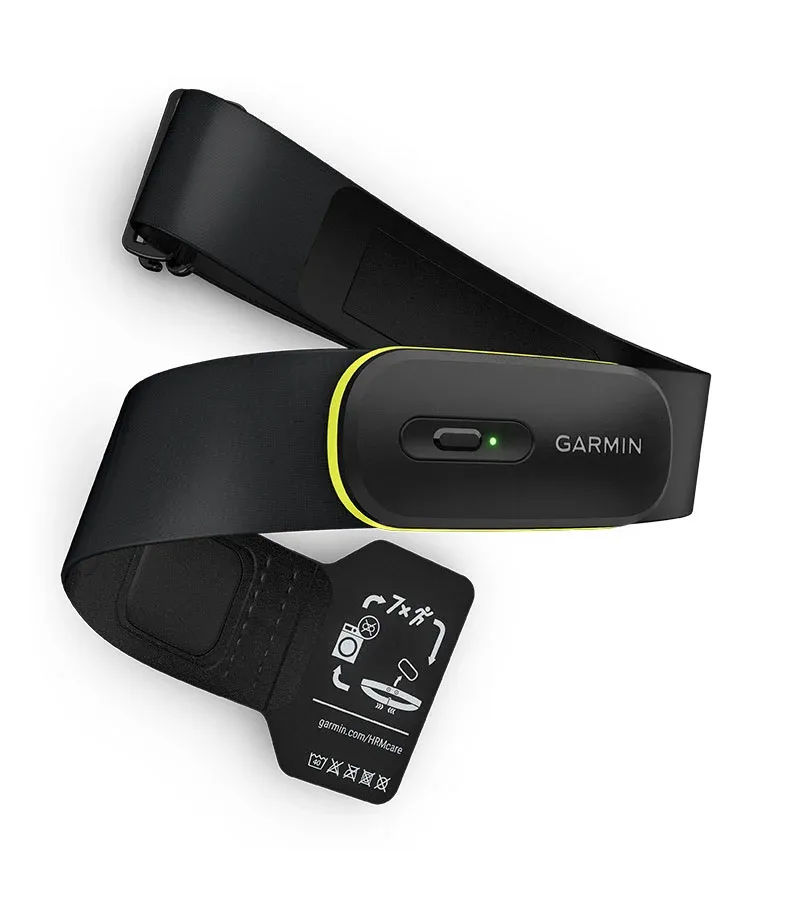
Garmin HRM 600 isn't just another chest strap. It's Garmin's attempt to turn the humble heart-rate monitor into a much more complete training device — and for serious runners already invested in the Garmin ecosystem, it mostly succeeds.
Accuracy is its biggest strength. Wareable used the HRM 600 for more than a year as a reference device when testing other wearables, reporting exceptionally consistent heart-rate tracking and faster reactions to changes in intensity than wrist-based optical sensors. Road.cc also found its readings stable and free from dropouts during testing.
That quick response is particularly valuable during intervals, where even a few seconds of lag can distort what happened during a short effort.
Garmin has also fixed several annoyances from the older HRM-Pro Plus. The sensor module now detaches, allowing the strap to go into the washing machine, while the new rechargeable battery eliminates disposable coin cells. Garmin claims up to two months per charge, and independent testers have generally found the battery meets or exceeds expectations.
There's much more here than heart rate. The HRM 600 can record workouts without a watch, store heart-rate data while swimming and transmit Running Dynamics such as ground-contact time, vertical oscillation and step speed loss to compatible Garmin watches.
Whether those extras justify the price is another question.
At around C$249.99 in Canada, the HRM 600 costs considerably more than simpler chest straps. Some of its headline metrics are also difficult to translate into meaningful training changes, and cyclists in particular receive little benefit from its runner-focused features.
There have also been complaints about early units with overly tight sensor snaps. Importantly, Garmin told REI that it implemented a design change after the problem surfaced and would cover affected devices under warranty.
The HRM 600 therefore makes the most sense for serious Garmin runners and multisport athletes who will actually use its deeper training features. If all you want is highly accurate heart rate, a Polar H10 or Garmin HRM 200 can accomplish the core job for considerably less.
Key data
Specifications
- Type
- Premium chest-strap heart-rate monitor
- Best for
- Serious runners, triathletes and Garmin users
- Canadian price
- Around C$249.99 currently ([Best Buy][1])
- Battery
- Rechargeable, up to 2 months at 1 hr/day
- Connectivity
- ANT+ + Bluetooth LE
- Bluetooth connections
- Up to 3 simultaneously
- Water resistance
- 5 ATM
- Weight
- 61 g with M–XL strap; 18 g module
- Standalone recording
- Yes
- Running Dynamics
- Yes, with compatible Garmin watches
- Strap
- Detachable module; machine washable
- Subscription required
- No