Peloton Launches Tread Flex, Tread Vision and Tread+ Vision
Peloton is making a much bigger push into running. The company has announced three new treadmills — Tread Flex, Tread Vision and Tread+ Vision — alongside new Peloton IQ running features, outdoor route importing and a new WHOOP integration. The lineup launches in the United States and Canada on October 1, 2026. For Canadian buyers, […]

Peloton is making a much bigger push into running. The company has announced three new treadmills — Tread Flex, Tread Vision and Tread+ Vision — alongside new Peloton IQ running features, outdoor route importing and a new WHOOP integration. The lineup launches in the United States and Canada on October 1, 2026.
For Canadian buyers, pricing starts at CA$2,995 for the Tread Flex, rises to CA$4,395 for the Tread Vision, and reaches CA$8,395 for the Tread+ Vision.
The hardware is only half the story, though. Peloton is also expanding Peloton IQ with personalized pace targets, running-form analysis, heart-rate-zone workouts and a particularly interesting feature called ReRuns, which can recreate the elevation profile of an outdoor run on your treadmill.
Peloton now has three very different treadmills
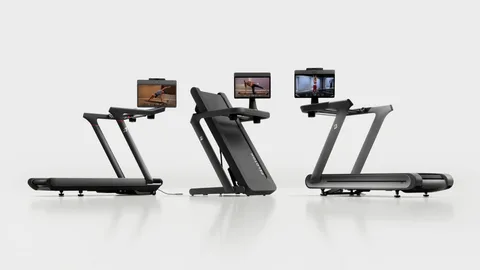
The new lineup is designed to cover everything from apartment-friendly walking and running to more serious endurance and hybrid training.
| Model | Starting price | What stands out |
|---|---|---|
| Peloton Tread Flex | US$2,195 / CA$2,995 | Folding design |
| Peloton Tread Vision | US$3,495 / CA$4,395 | Camera-based running analysis |
| Peloton Tread+ Vision | US$6,695 / CA$8,395 | Slat belt, Run Analysis and Sled Mode |
All three models feature swivel displays, Peloton’s rolling controls for speed and incline adjustments and Peloton IQ integration.
Peloton Tread Flex tackles the space problem
The Tread Flex is probably the most significant addition for mainstream buyers because it’s both Peloton’s first folding treadmill and its cheapest treadmill.
Peloton says the treadmill’s footprint can shrink by nearly 50% when folded, making it considerably easier to fit into apartments and shared spaces.
It also uses a brushless motor that Peloton rates at up to 70 dB while operating at its maximum 12.5 mph speed in the company’s internal testing without a runner on the belt. Actual noise will naturally depend on the runner, flooring and environment.
At CA$2,995, it’s still very much a premium home treadmill, but it gives Peloton a more accessible entry point than its Vision models.
The Tread Flex launches in the U.S. and Canada on October 1, 2026, with other markets following in spring 2027 and Australia in its autumn 2027 season.
Tread Vision uses a camera to analyze your running form
Move up to the Peloton Tread Vision and the focus changes from saving space to analyzing how you run.
The treadmill includes a movement-tracking camera that feeds data into Peloton IQ. During runs, the system can measure metrics including:
- Cadence
- Vertical oscillation
- Stride length
After the workout, Peloton generates a Running Efficiency Score from 1–100, along with feedback designed to help users understand their running mechanics.
The camera isn’t limited to running, either. Peloton says it can provide real-time form feedback during strength exercises performed off the treadmill.
Tread Vision also gets a redesigned cushioning system and dedicated jump buttons for faster adjustments during workouts.
It launches October 1 in the U.S., Canada, UK, Germany and Austria, followed by Australia on October 2. Canadian pricing starts at CA$4,395, compared with US$3,495 in the United States.
Tread+ Vision adds a 300-pound Sled Mode
At the top sits the Peloton Tread+ Vision, and this is where Peloton is going after more serious runners and hybrid athletes. It combines the company’s energy-returning slat belt with the same camera-powered running analysis found on Tread Vision.
But its standout addition is Sled Mode. The feature disengages the treadmill’s motor and allows the runner to manually drive the belt while adding up to 300 lb of resistance. That effectively turns the Tread+ into a weighted sled-style training station.
That’s particularly relevant for people training for events such as HYROX, where sled pushes form part of the competition.
Interestingly, Peloton isn’t restricting Sled Mode entirely to the new machine. The company says the feature will also be available on previous-generation Tread+ models.
The new Tread+ Vision launches October 1 for US$6,695 / CA$8,395.
Peloton IQ is getting much smarter for runners
The hardware announcements come alongside one of Peloton’s bigger running-software updates.
Several new Peloton IQ features begin rolling out to All-Access members in supported markets starting October 1.
IQ Pace Targets
Instead of giving everyone the same generic pace guidance, IQ Pace Targets analyzes recent running performance and recommends personalized speed ranges for intervals.
Users can accept the new recommendation before a class or continue using their existing pace level. Peloton says those recommendations will change as the runner’s performance evolves.
Heart Rate Zone Workouts
Peloton is also introducing non-instructor-led Zone 2 workouts.
Connect a compatible heart-rate monitor, smartwatch or wearable and the treadmill can provide real-time feedback intended to keep you within the target heart-rate zone.
This feature isn’t restricted to treadmills, either. Peloton says Heart Rate Zone Workouts will be available across its Bike, Tread and Row hardware.
ReRuns can recreate your outdoor runs indoors
For wearable users, ReRuns might be the most interesting feature in the entire announcement.
ReRuns allows an outdoor running route to be brought onto a Peloton treadmill. The machine then adjusts its incline to follow the elevation changes from the original route.
So if you have a favorite hilly outdoor run — or you’re training for a particular race course — you can effectively recreate its elevation profile indoors.
Peloton says routes can come from outdoor workouts recorded through its app or compatible connected platforms. Reporting around the rollout indicates imported routes can include activities originating from Garmin, Apple Health and WHOOP.
Peloton is also supplying routes from its New York and London run clubs, plus segments of the TCS New York City Marathon through its partnership with New York Road Runners.
That’s a clever bridge between wearables and connected fitness equipment rather than treating treadmill training as an entirely separate ecosystem.
Peloton and WHOOP now work together
There’s another wearable-related announcement here: Peloton has added WHOOP integration.
Users can connect their Peloton and WHOOP accounts so Peloton workouts can flow into WHOOP and contribute to the insights generated inside the WHOOP app.
The partnership builds on Peloton’s existing integrations with platforms including Apple Health, Fitbit and Garmin Connect.
Garmin integration has also become substantially more useful this year. Peloton introduced automatic exporting of Peloton workouts into Garmin Connect in March 2026, reducing the need to manually duplicate treadmill activities.
For people already tracking recovery and training load with a wearable, these integrations make Peloton less of a closed fitness platform than it once was.
Some of the new features are coming to older Peloton Treads
One detail that could easily get buried underneath the new hardware announcements is that you don’t necessarily need to buy a new treadmill to get the software upgrades.
Peloton says four features will roll out across its Tread lineup:
IQ Pace Targets, Heart Rate Zone Workouts, Shortcuts and ReRuns.
Sled Mode will similarly extend to existing Tread+ hardware. The big exception is Run Analysis, because it requires compatible movement-tracking camera hardware. Peloton lists it for Tread Vision, Tread+ Vision and the Cross Training Tread+.
That’s good news for existing owners because some of the most useful running upgrades aren’t being locked behind Peloton’s newest machines.
Peloton is becoming more interesting for wearable users
The Tread Flex may grab attention because it folds, while Tread+ Vision’s 300-pound Sled Mode makes for an impressive spec. But Peloton’s software changes could end up being more important.
Running watches and fitness wearables already collect huge amounts of training information. The problem is that home fitness equipment hasn’t always done much with that data.
Peloton is starting to connect those pieces. Outdoor routes can become indoor treadmill sessions. Wearable heart-rate data can drive Zone 2 workouts. Peloton workouts can feed back into Garmin and WHOOP, while camera tracking can add running-form metrics that wrist-based wearables generally can’t measure directly.
For Nerdfuse readers already using Garmin watches or WHOOP, ReRuns and the expanded wearable integrations are arguably the most interesting parts of this launch.
The new Peloton treadmill lineup goes on sale in the U.S. and Canada on October 1, 2026.
Reader questions
Frequently asked questions
What is the new Peloton Tread Flex?
The Peloton Tread Flex is Peloton’s first folding treadmill and its least expensive treadmill model. It folds to reduce its footprint by nearly 50% and reaches a maximum speed of 12.5 mph.
How much does the Peloton Tread Flex cost in Canada?
The Tread Flex starts at CA$2,995 in Canada and US$2,195 in the United States.
What's the difference between Tread Flex and Tread Vision?
Tread Flex focuses on a folding, space-saving design. Tread Vision adds a movement-tracking camera, Run Analysis, strength-training form feedback, additional cushioning and jump buttons.
What is Peloton Run Analysis?
Run Analysis uses a movement-tracking camera and Peloton IQ to measure cadence, vertical oscillation and stride length. After a run, it generates a Running Efficiency Score from 1–100 and provides feedback about running efficiency.
What is Peloton ReRuns?
ReRuns lets users bring previous outdoor routes onto a Peloton Tread. The treadmill automatically changes incline to recreate elevation changes from the original route.
Does Peloton work with Garmin?
Yes. Peloton supports Garmin Connect integration, including automatic exporting of Peloton workouts into Garmin Connect. Garmin-recorded outdoor activity data can also form part of Peloton’s connected running ecosystem.
Does Peloton work with WHOOP?
Yes. Peloton and WHOOP introduced an integration on September 22, 2026, allowing workout information to sync between their ecosystems.
When are the new Peloton treadmills available?
Tread Flex, Tread Vision and Tread+ Vision become available in the United States and Canada on October 1, 2026. Availability in other regions varies by model.
Research Notes / Sources
Peloton — Official Tread lineup announcement
Peloton — 2026 treadmill software update
Peloton — Tread Flex product page (Canada)
Peloton — Tread+ Vision product page (Canada)
Wareable — Peloton treadmill launch coverage
Latest reviews
Affiliate links
Some links in our posts are affiliate links. We may earn a commission at no extra cost to you.
How we work