Pros
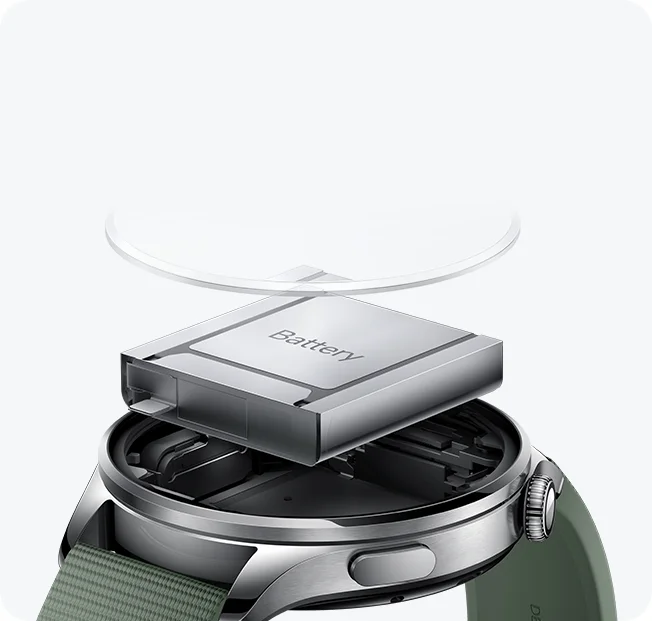
- Huge 930mAh silicon-carbon battery
- Wear OS 6 + full Google app ecosystem
- Gemini integration
- Google Wallet
- Excellent dual-band GPS potential
- Offline maps and navigation
- Good sleep-tracking evidence
- External Bluetooth HR monitors supported
- EMG gesture controls
Cons
- No ECG
- No blood-pressure monitoring
- No skin-temperature sensor
- No body-composition measurement
- Heavy at 56g
- 90-minute charging
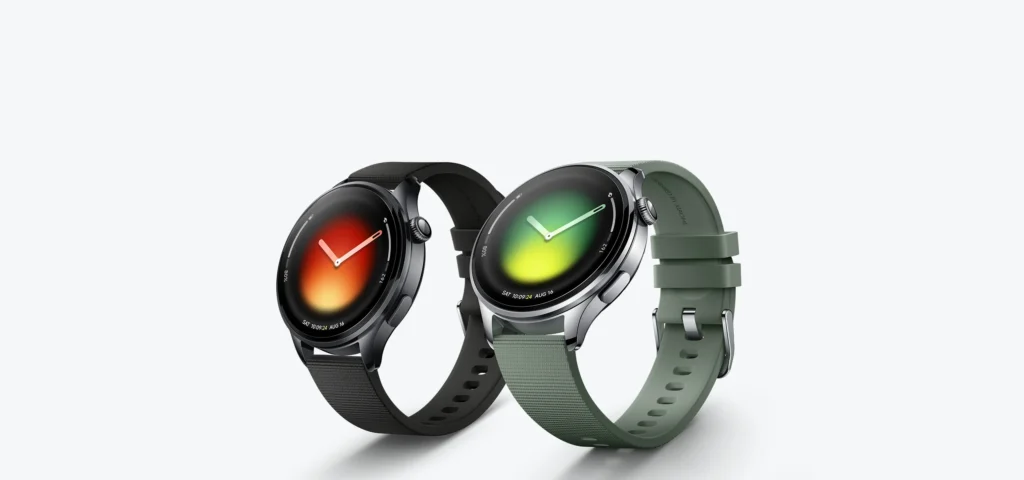
The Xiaomi Watch 5 tackles perhaps the biggest frustration with Wear OS smartwatches: battery life. Its massive 930mAh silicon-carbon battery is rated for six days in normal Smart Mode, and independent testing suggests that figure isn't fantasy. Wareable reached six full days with continuous health tracking enabled, while heavier use with the always-on display, GPS workouts and music still produced roughly three to four days.
That's a dramatic step forward from the Xiaomi Watch 2 Pro, which offered roughly two to three days. The upgrade also brings a larger 1.54-inch AMOLED display, up to 1,500 nits brightness, sapphire crystal and a stainless-steel case. Dual-frequency GPS, offline maps, Google Wallet, Google Maps, Gemini and the Play Store make this a proper Wear OS smartwatch rather than an oversized fitness tracker.
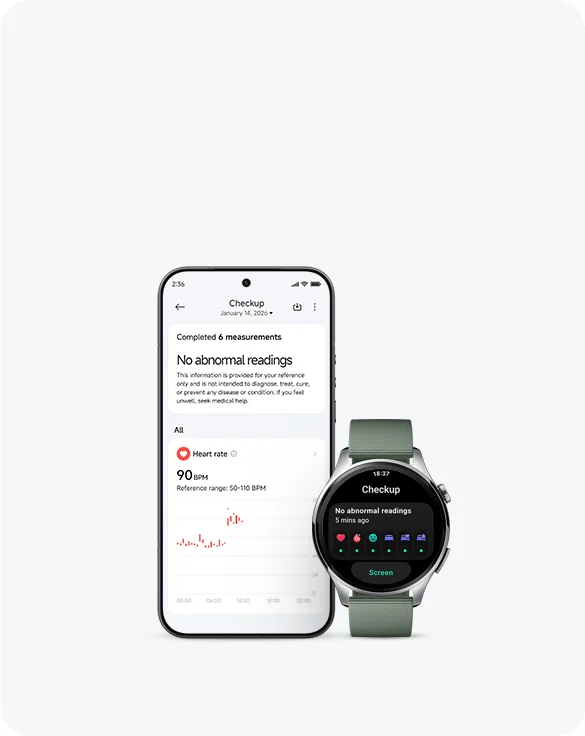
Fitness performance appears encouraging as well. Both Tech Advisor and Wareable found GPS distance and pace measurements competitive with dedicated sports watches, while sleep measurements broadly matched comparison devices including the Oura Ring 5.
However, Xiaomi has removed the body-composition and skin-temperature sensors found on the older Watch 2 Pro, while the Watch 5 also lacks ECG and blood-pressure monitoring. That's increasingly difficult to ignore when rivals such as the OnePlus Watch 4, Pixel Watch 5 and Galaxy Watch9 are moving deeper into health tracking.
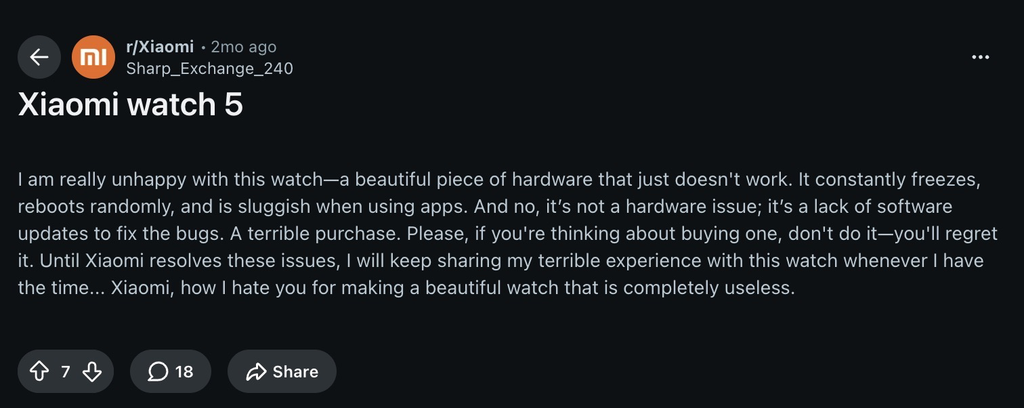
Software is the other weakness. Professional reviewers consistently find Xiaomi's Wear OS interface less polished than Google's and Samsung's, and several owners report freezes, syncing problems or random restarts. Those problems aren't universal, but they're common enough in community discussions to warrant consideration.
The result is a compelling but slightly unusual smartwatch. Buy the Xiaomi Watch 5 if battery life, GPS, premium construction and full Wear OS functionality are your priorities. Buyers focused primarily on advanced health features should compare it closely with the OnePlus Watch 4, Pixel Watch 5 and Galaxy Watch9 before deciding.
Key data
Specifications
- OS
- Wear OS 6
- Display
- 1.54-inch AMOLED, 480×480, 60Hz
- Brightness
- Up to 1,500 nits HBM
- Glass
- Sapphire crystal front and sensor cover
- Case
- 316L stainless steel
- Size
- 47 × 47 × 12.3mm
- Weight
- 56g without strap
- Processor
- Snapdragon W5 Gen 1 + BES2800 low-power chip
- RAM / Storage
- 2GB / 32GB
- Battery
- Huge 930mAh silicon-carbon - 6 days Smart / 4 days AOD / 18 days Power Saving
- GPS
- Dual-band L1+L5, five satellite systems
- Water resistance
- 5ATM
- Health
- HR, SpO₂, stress, sleep, women's health
- Notably absent
- ECG, blood pressure, body composition, skin temperature
- Special feature
- EMG-based gesture controls
- Payments
- Google Wallet/NFC
- Maps
- Google Maps + Xiaomi offline maps/navigation
- Compatibility
- Android 8+ only; no iPhone support
- Launch
- March 2026