Amazfit T-Rex Dual Solar Launches With Dual-Sided Solar Charging
Amazfit has officially launched the T-Rex Dual Solar, and its approach to solar charging is genuinely different from what we normally see on rugged outdoor watches. Instead of relying on a solar collector only around or beneath the display, the T-Rex Dual Solar has two photovoltaic surfaces — one at the front and a much […]
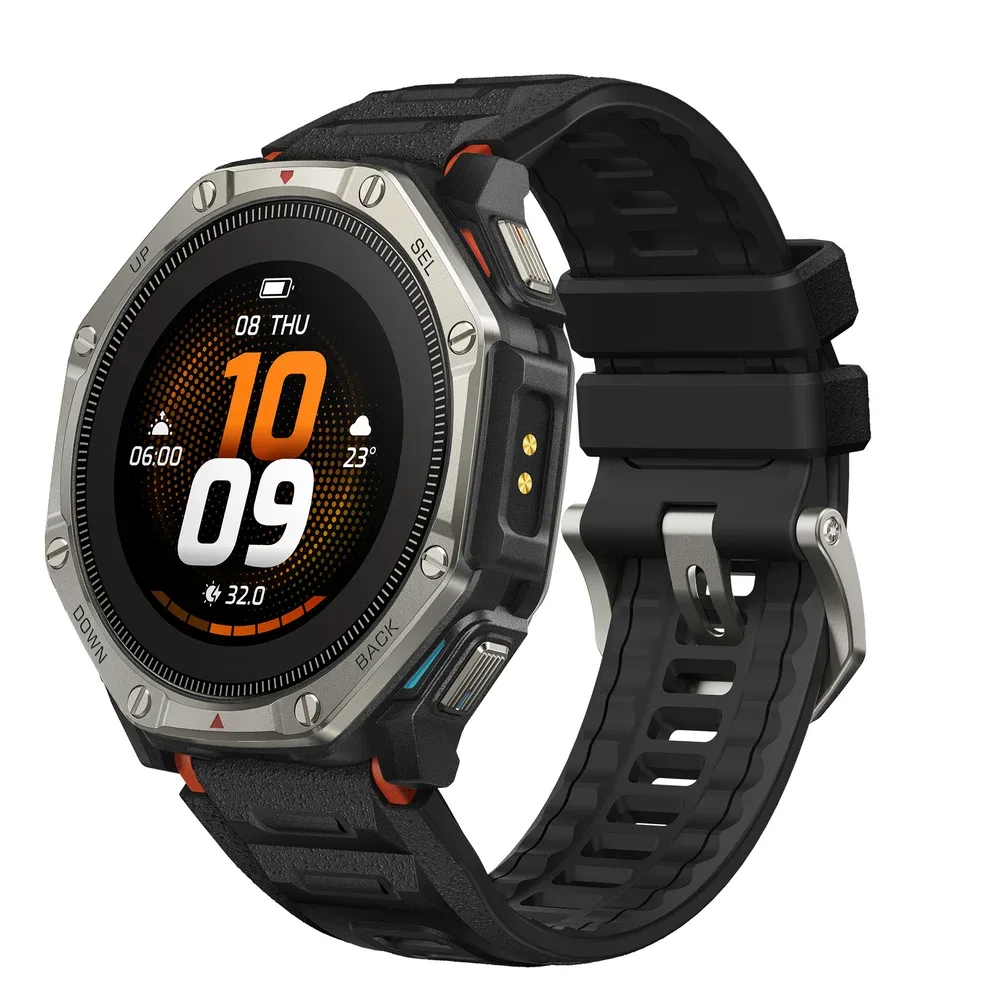
Amazfit has officially launched the T-Rex Dual Solar, and its approach to solar charging is genuinely different from what we normally see on rugged outdoor watches.
Instead of relying on a solar collector only around or beneath the display, the T-Rex Dual Solar has two photovoltaic surfaces — one at the front and a much larger one built into the back of the watch. Amazfit calls it the world’s first AMOLED smartwatch with a dual-sided solar charging system.
That second panel is the interesting part. The rear solar collector has more than twice the collection area of the front panel, according to Amazfit. Of course, there’s an obvious problem: your wrist blocks it while you’re wearing the watch. Amazfit’s solution is to let you take the watch off and deliberately expose the rear panel to sunlight, including by attaching it to a backpack using the included woven lanyard.
Two solar panels instead of one
Solar charging isn’t new to outdoor watches. Garmin has been using solar technology across products such as its Fenix, Instinct and Enduro families for years.
Amazfit’s implementation is different because it combines an AMOLED display with separate front and rear solar collection areas.
The front collector works in the way you’d expect: leave the watch exposed to sufficient sunlight while wearing it and it supplements the battery. Amazfit says that under its testing conditions — three hours per day at 50,000 lux — typical battery life can increase from up to 25 days to up to 34 days.
The rear panel is considerably larger. It sits inside the glass-ceramic back plate and is intended primarily for off-wrist charging. Earlier analysis of Amazfit’s software had already revealed that the company was developing separate measurements for the front and rear photovoltaic panels, but today’s announcement makes the system official.
Amazfit has also introduced a Solar Priority Mode, which puts the watch into an ultra-low-power state to maximize solar energy recovery when the watch is off your wrist.
Solar won’t replace the charger
There’s an important catch behind some of the huge battery numbers being discussed around the T-Rex Dual Solar.
Amazfit isn’t suggesting that you’ll routinely leave the watch in the sun for an afternoon and completely recharge it. T3 notes that Amazfit describes solar primarily as a way to slow battery depletion, and charging can also be disabled automatically when temperatures become excessive or the battery is nearly full.
The company nevertheless says solar can act as an emergency backup. Amazfit specifically claims that sufficient sunlight can help bring a completely depleted T-Rex Dual Solar back to life, potentially restoring access to essential features such as maps and route information when conventional charging isn’t available.
That’s arguably more interesting than simply chasing the biggest possible battery-life number.
This is also a seriously rugged T-Rex
Amazfit hasn’t built the Dual Solar around solar charging alone.
There’s a 1.32-inch AMOLED touchscreen reaching up to 3,000 nits, protected by scratch-resistant sapphire crystal. The bezel uses Grade 5 titanium, while the watch carries a 10 ATM water-resistance rating and supports recreational diving to 50 metres.
There’s also a built-in flashlight with a red-light option, while the 660mAh battery is rated for up to 25 days of typical use or up to 41 hours using Accuracy GPS Mode before accounting for solar assistance.
For navigation, Amazfit includes preloaded full-colour maps, downloadable contour and ski maps, turn-by-turn directions, intelligent route planning, waypoints and points of interest. A Navigation Gradient Curve can also show upcoming climbs and descents through a colour-coded elevation profile.
The watch additionally offers more than 180 sports modes, Zepp Coach, training and recovery tools, Bluetooth calling, offline MP3 playback and Zepp Flow voice controls.
Amazfit says its Zepp platform provides its training, recovery and activity insights without requiring a paid subscription.
Amazfit isn’t playing the cheap-Garmin game anymore
Perhaps the biggest surprise is the price.
The T-Rex Dual Solar launches at US$649.99, with sales beginning September 22 through Amazfit and Amazon.
That’s a significant change from the value-first positioning associated with watches such as the T-Rex 3. Amazfit’s current US lineup lists the standard T-Rex 3 at $279.99, while the T-Rex Ultra 2 sits at $549.99.
In other words, Amazfit isn’t simply trying to make a cheaper alternative to a Garmin Fenix here. The T-Rex Dual Solar is moving directly into premium outdoor-watch territory.
For Canadian buyers, there’s another detail to watch: Amazfit’s launch announcement gives the US$649.99 price but does not specify Canadian pricing. We’ll update this once Canadian pricing and retail availability are confirmed.
How does it compare with Garmin?
The inevitable comparison is Garmin, but the two companies are approaching solar endurance differently.
Amazfit is trying to retain the things people expect from a modern premium smartwatch — a bright AMOLED touchscreen, full-colour offline maps, calling, music and other smart features — while using two solar surfaces to recover some of the energy those features consume.
Garmin has traditionally been able to extract exceptional solar endurance by pairing solar technology with particularly efficient displays and aggressive power-management modes.
So the headline here isn’t necessarily that Amazfit has suddenly “beaten Garmin” on battery life. It’s that Amazfit has found a different way to combine AMOLED and solar charging, including a much larger collector that becomes useful when the watch comes off your wrist.
Independent testing will be particularly important. Solar performance varies dramatically depending on light intensity, exposure time, temperature, watch orientation and which features are running.
The bigger question: does dual solar actually work in everyday use?
On paper, putting a solar collector on the back sounds slightly ridiculous because that’s precisely the part of a smartwatch that spends most of its life pressed against your skin.
But Amazfit clearly knows that.
The rear panel isn’t really intended to operate normally while you’re wearing the watch. It’s effectively an additional charging surface for situations where you’re willing to take the watch off and deliberately expose it to sunlight.
That could make sense for hikers, climbers, backpackers and people spending several days away from electricity. For someone wearing the watch around an office all week, it’s unlikely to matter nearly as much.
And that’s what makes the T-Rex Dual Solar interesting: the second solar panel isn’t trying to make everyday charging disappear. It’s designed to give outdoor users another way to keep the watch running when plugging it in isn’t an option.
Whether that advantage is worth US$649.99 will depend heavily on how much energy that rear panel can actually recover under real-world conditions.
Reader questions
Frequently asked questions
What is the Amazfit T-Rex Dual Solar?
The T-Rex Dual Solar is Amazfit’s premium rugged outdoor smartwatch featuring an AMOLED display and photovoltaic charging surfaces on both the front and rear of the watch. Amazfit describes it as the first AMOLED smartwatch with a dual-sided solar charging system.
How long does the Amazfit T-Rex Dual Solar battery last?
Amazfit rates it for up to 25 days of typical use without solar assistance. With the front solar collector receiving three hours of 50,000-lux exposure per day, Amazfit says that figure can increase to up to 34 days.
Can the T-Rex Dual Solar charge from the back?
Yes. The glass-ceramic rear plate contains a solar collector with more than twice the collection area of the front panel. It’s primarily designed to collect energy when the watch is removed from your wrist and exposed to sunlight.
Does solar charging mean you never have to plug it in?
Not necessarily. Solar performance depends heavily on available sunlight and usage. The system is mainly intended to extend endurance and provide another source of energy when conventional charging isn’t available.
Does the Amazfit T-Rex Dual Solar have offline maps?
Yes. It includes preloaded full-colour maps and supports downloadable contour and ski maps, along with route planning, turn-by-turn navigation, waypoints and POIs.
How much does the Amazfit T-Rex Dual Solar cost?
Amazfit announced a US price of $649.99, with availability beginning September 22, 2026. Canadian pricing was not specified in the launch announcement.
Latest reviews
Affiliate links
Some links in our posts are affiliate links. We may earn a commission at no extra cost to you.
How we work