Suunto Core 2 Review: Is This Simple Outdoor Watch Worth It?
Suunto Core 2 combines an altimeter, barometer and compass with 15-month battery life and rugged construction. It deliberately skips GPS and smartwatch features — and for the right outdoor user, that's exactly the appeal.
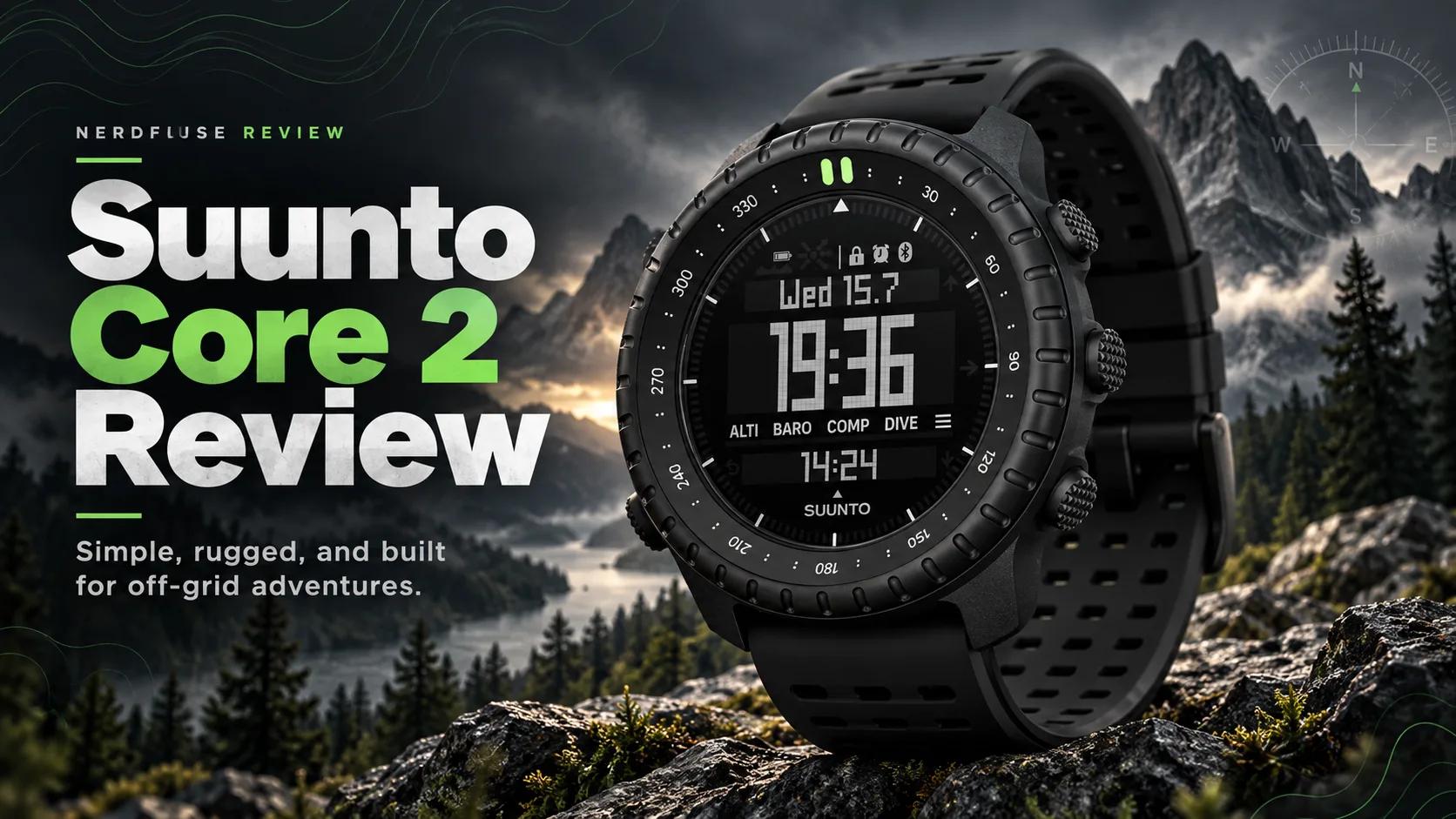
What stands out
Pros
Cons
Product specifications
Before you buy
Suunto Core 2 Review: The Old-School Outdoor Watch Gets a Proper Upgrade
The Suunto Core 2 feels almost unusual in 2026 — and that is exactly why it works.
While most outdoor watches are racing to add brighter AMOLED screens, GPS maps, training readiness scores, music, notifications and increasingly complex health metrics, the Core 2 keeps things much simpler. It focuses on the basics that made the original Suunto Core popular: altitude, weather and direction.
There is no built-in GPS, heart-rate sensor or touchscreen here. Instead, you get an altimeter, barometer and compass, wrapped in a rugged case with physical buttons and a battery designed to last for months rather than days.
For hikers, campers and outdoor users who do not want another device constantly demanding a charger, that simplicity can be a genuine advantage.
A familiar formula, but noticeably improved
The Core 2 does not radically reinvent the original Suunto Core. It modernizes it.
The watch retains the large, rugged outdoor design, but Suunto has improved several areas that mattered on the older model. Water resistance increases to 10 ATM, the buttons are larger, the display has improved reflectivity, and the backlight can switch between red and green.
Those sound like small changes on paper, but they make sense for the type of person likely to buy this watch. A brighter, easier-to-read display matters when you are outside in changing light. Bigger physical buttons are useful when wearing gloves. Red illumination is handy at night when you want to preserve your night vision.
The Core 2 is still a fairly large watch, though. At roughly 49 mm across, it is going to look and feel substantial on smaller wrists. This is not trying to be an understated everyday wearable.
The ABC sensors are still the reason to buy it
The Core 2 is built around what are commonly called ABC sensors: altimeter, barometer and compass. The altimeter gives you an estimate of your elevation, which can be useful when hiking or climbing. The barometer tracks atmospheric pressure and can help you spot changing weather conditions, while the digital compass gives you basic directional information without needing a phone connection.
Suunto also includes features such as storm alerts, sunrise and sunset information, moon phases and pressure trends. This combination makes the Core 2 particularly useful when you are travelling somewhere where cell reception is poor or completely unavailable.
There is an important limitation, though. Because altitude is calculated using barometric pressure rather than GPS, changes in weather can affect altitude readings. Periodic calibration is therefore part of owning this type of watch. That is not necessarily a flaw — it is simply how traditional barometric altimeters work.
Battery life is where the Core 2 really shines
Battery life may be the strongest argument for choosing the Core 2 over a modern outdoor smartwatch.
Suunto claims up to around 15 months of battery life in basic time mode, and the watch uses a replaceable coin-cell battery rather than an internal rechargeable one. That means there is no weekly charging routine, no proprietary charging cable to pack and far less concern about battery degradation several years down the line.
For someone heading on a multi-day camping trip, keeping an emergency watch in a backpack or simply wanting a device that can be ignored until needed, this approach makes a lot of sense. It is one of the biggest philosophical differences between the Core 2 and something like a Garmin Instinct or Suunto Vertical.
Those watches can do far more, but they also need regular charging. The Core 2 does less and asks less in return.
It is connected — just not really a smartwatch
Interestingly, Suunto has added Bluetooth to the Core 2. That allows the watch to communicate with the Suunto app for things such as firmware updates and time synchronization.
Do not mistake that for full smartwatch functionality, though. You are not buying the Core 2 for app notifications, contactless payments, music controls or advanced fitness tracking. The phone connection mostly exists to make maintaining the watch easier.
That feels appropriate for the product. Adding Bluetooth without turning the Core into another notification-heavy smartwatch preserves what made the original appealing in the first place.
The display is better, but still intentionally basic
Suunto says the updated display offers noticeably better reflectivity than the original Core, which should improve outdoor readability.
There are also red and green backlight modes. The green light works as the conventional brighter option, while red is particularly useful in dark environments because it is less disruptive to night vision.
Still, do not expect anything resembling a modern AMOLED smartwatch. There are no colourful maps, animated widgets or high-resolution watch faces. The screen is functional first. Depending on your expectations, that could either feel refreshingly practical or noticeably dated.
Early software complaints are worth knowing about
The biggest concern surrounding the Core 2 so far appears to be software rather than hardware.
Some early owners have questioned how the altimeter and barometer modes behave compared with the original Core. There have also been complaints about certain information not being displayed in quite the same way longtime Core users expected.
That does not necessarily mean the Core 2 has a fundamental problem. Firmware can be updated through the Suunto app, which gives the company more flexibility to improve the watch over time. But it is still something worth considering if you are upgrading specifically from an older Core.
Longtime users may notice that some behaviours and interface choices have changed rather than simply being carried over unchanged.
What the Suunto Core 2 is not
The easiest way to understand the Core 2 is by being clear about what it does not try to do.
There is no GPS route tracking.
There is no optical heart-rate sensor.
There are no detailed training metrics.
There are no offline maps.
There is no sleep or recovery analysis comparable with modern Garmin, COROS or Suunto sports watches.
If those features matter to you, the Core 2 is probably the wrong watch.
A Suunto Vertical, Suunto Race or Garmin Instinct would make considerably more sense for someone who wants detailed activity tracking and navigation.
But comparing the Core 2 purely on the number of features also misses its purpose. This is closer to a digital outdoor instrument that happens to sit on your wrist.
Who should buy the Suunto Core 2?
The Core 2 makes the most sense for hikers, campers, anglers, hunters, overlanders and outdoor users who value simple, dependable tools more than smartwatch features.
It is also interesting for anyone tired of charging yet another wearable. You can put it on, use the compass when you need it, monitor elevation and pressure, check sunrise or sunset information and largely forget about the battery.
That is surprisingly rare today.
Final thoughts
The Suunto Core 2 succeeds because Suunto did not try to turn it into something it is not.
Instead of transforming the Core into another GPS sports smartwatch, the company kept the basic ABC-watch formula and improved the areas that mattered most: durability, water resistance, visibility, controls and battery life.
It is not the watch for runners looking for training analytics or hikers who depend heavily on GPS maps. But for someone who wants a rugged outdoor watch with useful environmental sensors and almost no charging anxiety, the Core 2 remains a compelling option.
Its simplicity will look like a limitation to some buyers. For the right person, it is the entire point.
Reader questions
Frequently asked questions
Does the Suunto Core 2 have GPS?
No. The Core 2 does not contain GPS. It uses a barometric altimeter and magnetic compass for outdoor information rather than satellite positioning. Suunto
Does the Suunto Core 2 measure heart rate?
No. There is no optical heart-rate sensor, so it isn’t intended for detailed fitness or training analysis.
How long does the Suunto Core 2 battery last?
Suunto claims up to 15 months in basic time mode. It uses a replaceable CR3032 battery instead of a rechargeable battery. SUUNTO US
Is the Suunto Core 2 waterproof?
It carries a 10 ATM water-resistance rating, a major improvement over the original Core’s 3 ATM rating. Suunto
Does the Suunto Core 2 connect to a phone?
Yes. Bluetooth allows connection to the Suunto app for functions including time synchronization and firmware updates. The watch’s main ABC outdoor functions still work independently. SUUNTO US
Is the Suunto Core 2 better than the original Suunto Core?
Core 2 adds better water resistance, longer claimed battery life, an improved display, red/green backlighting, larger buttons, Bluetooth, moon phase information and a step counter. Longtime Core users may still prefer aspects of the original alti/baro interface. Suunto
Where to buy
Affiliate link: we may earn a commission if you buy through it, at no extra cost to you.
Verdict
The Suunto Core 2 is a refreshingly simple outdoor watch. It gives hikers and campers an altimeter, barometer, compass, storm alerts and excellent battery life without turning the watch into another miniature smartphone. The brighter display, tougher construction, 10 ATM water resistance and replaceable battery make it a meaningful upgrade over the original Core. The catch is obvious: there is no GPS, heart-rate sensor, maps or serious fitness tracking, and some early owners have reported software and altimeter/barometer interface quirks. Suunto
Best for: Hiking, camping, overlanding and outdoor users who want a simple ABC watch
How we score